GST return filing is an important compliance activity for businesses and accounting professionals. Accurate GST filing ensures that businesses maintain proper tax records, claim eligible Input Tax Credit (ITC), and avoid penalties caused by incorrect reporting.
Using accounting software like TallyPrime makes GST management easier by automating calculations, generating reports, and simplifying compliance processes. However, incorrect configurations, inaccurate data entry, or lack of understanding of GST rules can still lead to errors while preparing GST returns.
For accountants and finance professionals, learning the right process and understanding common mistakes can help improve accuracy and efficiency in GST filing.
Why Accurate GST Return Filing in Tally is Important?
GST returns contain important details related to sales, purchases, tax liabilities, and Input Tax Credit. Any mismatch between business records and GST returns can create compliance issues.
Common consequences of GST filing errors include:
- Incorrect tax calculations
- Delay in return filing
- Loss of eligible Input Tax Credit
- GST notices from authorities
- Additional compliance efforts
Practical knowledge of GST Return in Tally helps professionals identify and resolve these issues before filing returns.
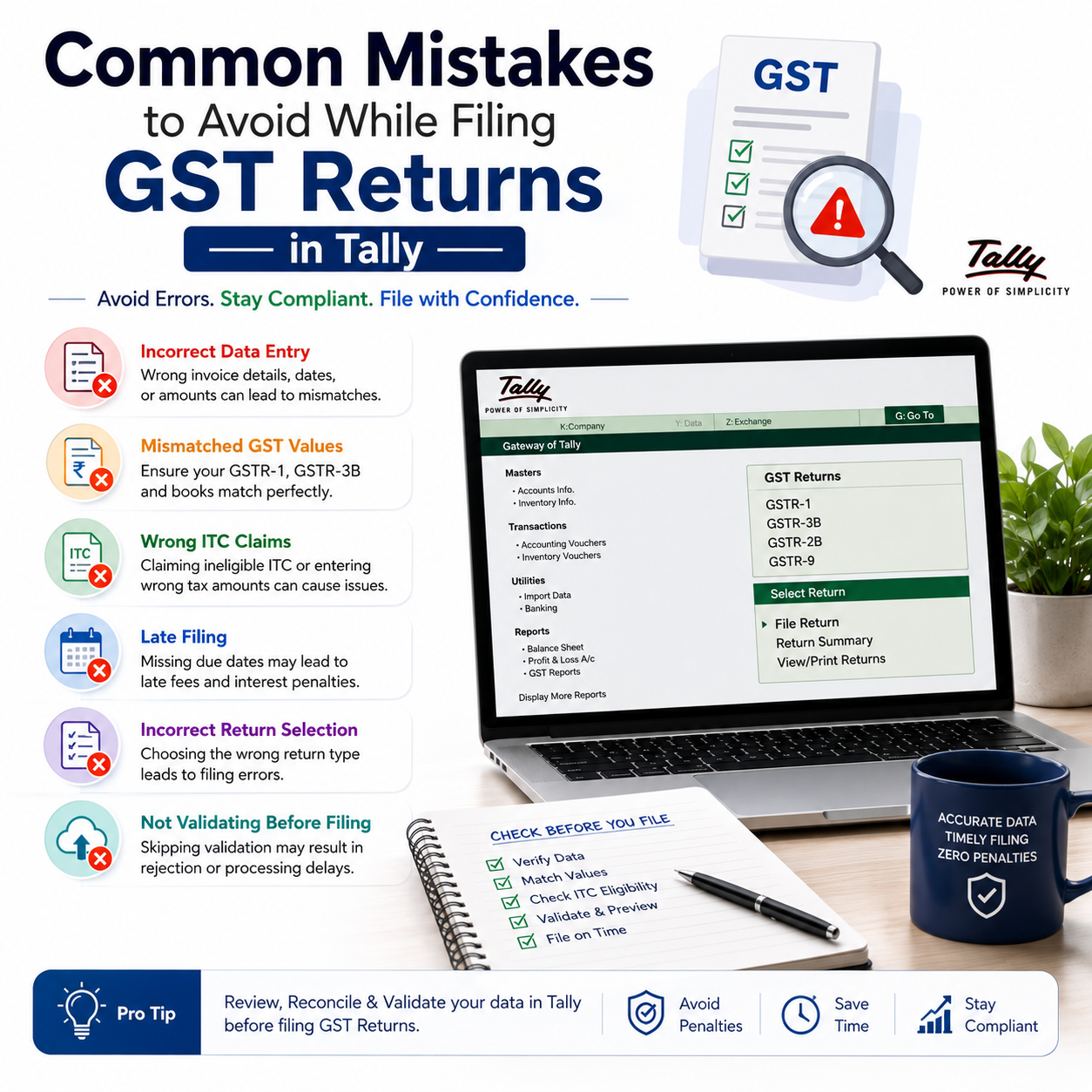
1. Incorrect GST Configuration in TallyPrime
One of the most common mistakes while filing GST returns in Tally is incorrect GST configuration.
Before recording transactions, businesses need to correctly configure:
- GST registration details
- State and GSTIN information
- Tax rates
- GST ledgers
- HSN/SAC details
Incorrect configuration can result in wrong tax calculations and inaccurate GST reports.
How to avoid it:
Always verify GST settings in TallyPrime before entering transactions. Ensure that company details, GSTIN, tax ledgers, and applicable tax rates are correctly updated.
2. Wrong GST Tax Rate Selection
Selecting the incorrect GST rate during invoice creation can impact GST calculations and return filing.
For example, applying 18% GST instead of 12% GST can create differences between:
- Sales invoices
- GST reports
- Tax liability calculations
How to avoid it:
Accountants should verify the applicable GST rate for products and services before creating invoices. Maintaining updated GST rate information helps prevent reporting errors.
3. Incorrect Entry of Sales and Purchase Transactions
Accurate transaction recording is the foundation of GST compliance. Errors in sales and purchase entries can affect GST returns.
Common transaction mistakes include:
- Incorrect invoice numbers
- Wrong customer or supplier details
- Incorrect taxable value
- Missing GST amounts
- Duplicate entries
How to avoid it:
Review all transactions regularly and ensure that invoice details match supporting documents before preparing GST returns.
4. Not Reconciling GST Data Regularly
GST reconciliation helps businesses compare their accounting records with GST-related data. Not performing reconciliation can lead to mismatches.
Common reconciliation issues include:
- Missing purchase invoices
- Differences in tax amounts
- Supplier invoice mismatches
- Incorrect Input Tax Credit claims
How to avoid it:
Regularly reconcile purchase and sales data in TallyPrime. Identifying differences early makes GST return filing smoother and more accurate.
5. Incorrect Input Tax Credit (ITC) Claims
Input Tax Credit allows businesses to reduce their GST liability by claiming eligible taxes paid on purchases. However, incorrect ITC claims can create compliance problems.
Common ITC-related mistakes include:
- Claiming credit for ineligible purchases
- Missing eligible ITC
- Incorrect purchase entries
- Claiming ITC without proper documentation
How to avoid it:
Maintain proper purchase records and verify ITC eligibility before including it in GST returns.
6. Ignoring HSN and SAC Details
HSN (Harmonized System of Nomenclature) and SAC (Service Accounting Code) details are important components of GST invoices.
Missing or incorrect HSN/SAC details can impact invoice accuracy and GST reporting.
How to avoid it:
Update correct HSN/SAC codes while creating stock items or service ledgers in TallyPrime.
7. Not Checking GST Reports Before Filing
Many businesses directly proceed with GST filing without reviewing generated reports.
TallyPrime provides GST reports that help identify:
- Tax payable details
- Input Tax Credit information
- Sales and purchase summaries
- Return preparation data
How to avoid it:
Always review GST reports before filing returns. Checking reports helps identify errors and improve filing accuracy.
8. Missing GST Return Filing Deadlines
Late filing of GST returns can result in penalties and additional compliance costs.
Businesses need to track deadlines for returns such as:
- GSTR-1
- GSTR-3B
- Other applicable GST filings
How to avoid it:
Maintain a GST compliance calendar and complete return preparation in advance.
9. Lack of Practical Knowledge of GST Processes
Understanding GST concepts alone is not enough for accurate return filing. Professionals need practical experience with accounting software and GST workflows.
Many beginners struggle with:
- Recording GST transactions
- Preparing GST reports
- Managing reconciliation
- Understanding return formats
How to avoid it:
Practical GST training with simulation-based learning helps learners understand real-world GST processes and improve confidence.
10. Not Keeping Accounting Data Updated
Outdated accounting records can create difficulties during GST return preparation.
Delayed updates may result in:
- Missing invoices
- Incorrect tax calculations
- Incomplete GST reports
How to avoid it:
Update accounting records regularly and maintain proper documentation for all transactions.
How GST Simulation Training Helps Avoid Filing Mistakes
GST Simulation-based training provides learners with practical experience in handling GST activities in a controlled environment. It allows students to practise GST workflows, understand return preparation, and learn how to identify common errors.
With GST simulation training, learners can gain experience in:
- Creating GST transactions
- Preparing invoices
- Understanding GST reports
- Practising reconciliation
- Learning GST return filing processes
Practical learning helps accounting professionals become more confident while managing GST compliance activities.
Benefits of Learning GST Return Filing in Tally
Learning GST Return in Tally helps professionals:
- Improve accounting accuracy
- Understand GST compliance processes
- Manage business transactions efficiently
- Prepare GST reports confidently
- Build job-ready taxation skills
For students, accountants, and finance professionals, GST knowledge combined with TallyPrime skills can open opportunities in accounting and taxation roles.
Conclusion
Filing GST returns accurately in Tally requires proper configuration, correct transaction entries, regular reconciliation, and understanding of GST compliance rules. Avoiding common mistakes helps businesses maintain accurate records and reduces the risk of compliance issues.
Practical training in GST Return in Tally enables learners to develop the skills required to manage GST filing confidently. By combining GST knowledge with TallyPrime expertise, accounting professionals can improve their efficiency and build stronger career opportunities in finance and taxation.