GST compliance has become an essential skill for accounting professionals, business owners, and finance learners. With businesses managing multiple transactions, invoices, and tax requirements, knowing how to accurately prepare and file GST returns is a valuable career skill.
For beginners, learning GST Return Filling course provides a practical way to understand GST compliance while working with accounting software used widely across industries. Tally helps simplify GST calculations, invoice management, tax reports, and return preparation, making the filing process easier and more efficient.
A structured learning approach with practical training can help learners understand GST concepts and gain confidence in handling real-world accounting tasks.
What is GST Return Filing in Tally?
GST return filing is the process of submitting details of sales, purchases, taxes collected, and Input Tax Credit (ITC) to the GST portal. Businesses registered under GST must regularly file returns to maintain compliance.
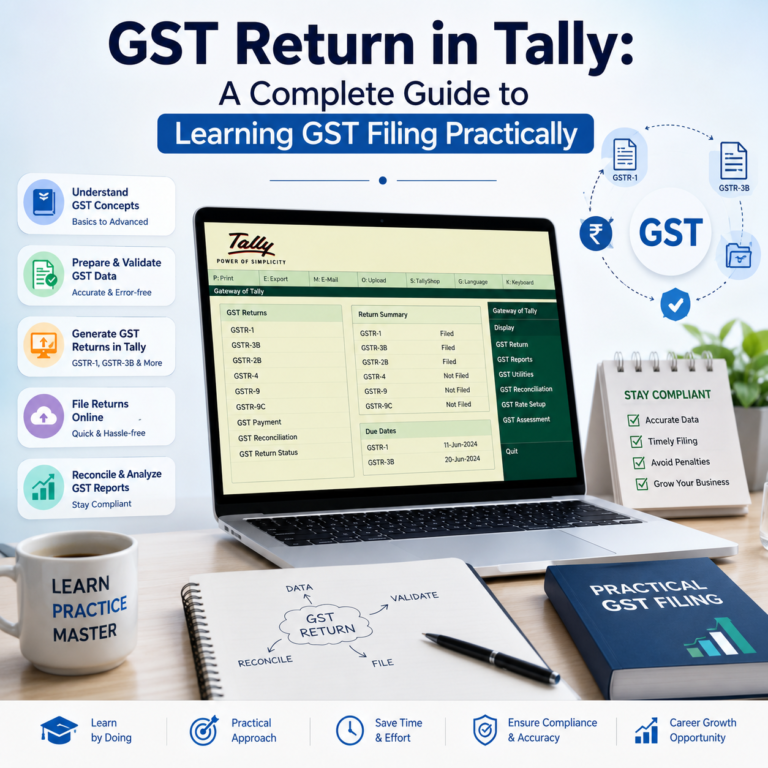
GST Return in Tally refers to managing GST-related accounting activities using Tally software, including:
- Recording GST sales and purchase transactions
- Creating GST-compliant invoices
- Calculating CGST, SGST, and IGST
- Generating GST reports
- Preparing return data for filing
By learning GST filing through Tally, beginners can understand how accounting entries directly impact GST returns.
Why Should Beginners Learn GST Return Filing Using Tally?
Many accounting tasks today require practical knowledge of both taxation concepts and accounting software. Learning GST Return in Tally helps beginners bridge the gap between theoretical GST knowledge and actual business operations.
1. Understand Real-World GST Compliance
GST filing involves more than entering numbers. Professionals need to understand invoice accuracy, tax calculations, reconciliation, and compliance requirements.
Learning through Tally allows beginners to practice business transactions and understand how they affect GST reports.
2. Improve Accounting Skills
Tally is widely used for managing business accounts. Combining GST knowledge with Tally skills helps learners develop practical accounting expertise required for finance and taxation roles.
3. Reduce Filing Errors
Incorrect GST entries can result in mismatches and compliance issues. Practical training helps learners identify common mistakes related to:
- Wrong GST rates
- Incorrect invoice details
- Missing transactions
- Improper tax calculations
Step-by-Step Process to Learn GST Return in Tally
Step 1: Understand GST Basics
Before starting GST filing in Tally, beginners should understand fundamental GST concepts:
- What is GST?
- Types of GST (CGST, SGST, IGST)
- GST registration
- Input Tax Credit (ITC)
- GST invoice requirements
- GST return types
A strong foundation makes it easier to understand how transactions are recorded in Tally.
Step 2: Enable GST Features in Tally
The first practical step is configuring GST settings in Tally.
This includes:
- Enabling GST features
- Entering GST registration details
- Configuring tax rates
- Creating GST ledgers
Proper setup ensures that transactions are recorded correctly and GST reports are generated accurately.
Step 3: Record GST Transactions
After GST configuration, learners practice recording different business transactions such as:
Sales Transactions
- Creating customer invoices
- Applying correct GST rates
- Recording outward supplies
Purchase Transactions
- Entering supplier invoices
- Managing input tax credits
- Maintaining purchase records
Correct transaction entry is the foundation of accurate GST return preparation.
Step 4: Generate GST Reports in Tally
Once transactions are recorded, Tally generates GST-related reports that help businesses review their tax information.
Learners should understand:
- GST summary reports
- Tax liability reports
- Input Tax Credit reports
- Return-related summaries
These reports help identify errors before submitting GST returns.
Step 5: Learn GST Return Preparation
A beginner should understand how different GST returns work, including:
GSTR-1
Used for reporting outward supplies or sales transactions.
GSTR-3B
A summary return used for reporting tax liability and claiming eligible ITC.
Learning how these returns are prepared from accounting data is an important part of mastering GST Return in Tally.
Benefits of Learning GST Return Filing Through Simulation-Based Training
Reading GST concepts is helpful, but practical experience builds confidence. Simulation-based learning allows learners to practice GST activities in a controlled environment without affecting real business data.
A GST simulation environment can help learners practice activities such as GST registration, invoice uploading, e-way bill generation, and return filing workflows.
Key benefits include:
- Hands-on GST return filing practice
- Better understanding of GST workflows
- Confidence in handling accounting scenarios
- Ability to identify and correct mistakes
- Job-ready practical skills
Learners can explore practical GST training through the GST Simulation platform offered by Tally Education.
Common Mistakes Beginners Should Avoid While Filing GST Returns in Tally
Beginners often face challenges while learning GST filing. Some common mistakes include:
1. Incorrect GST Configuration
Wrong GST settings can impact tax calculations and reports.
2. Wrong Tax Classification
Applying incorrect GST rates or selecting wrong tax categories can create filing errors.
3. Not Reconciling Data
Before filing returns, businesses should verify that accounting records match GST data.
4. Ignoring Invoice Details
Missing invoice numbers, GSTIN details, or transaction information can affect return accuracy.
Career Opportunities After Learning GST Return in Tally
Professionals with GST and Tally skills can explore opportunities such as:
- Accountant
- GST Executive
- Tax Assistant
- Finance Associate
- Accounts Payable Executive
- Freelance Accounting Consultant
Companies prefer candidates who have practical knowledge of accounting software along with taxation skills.
How to Start Learning GST Return Filing Using Tally?
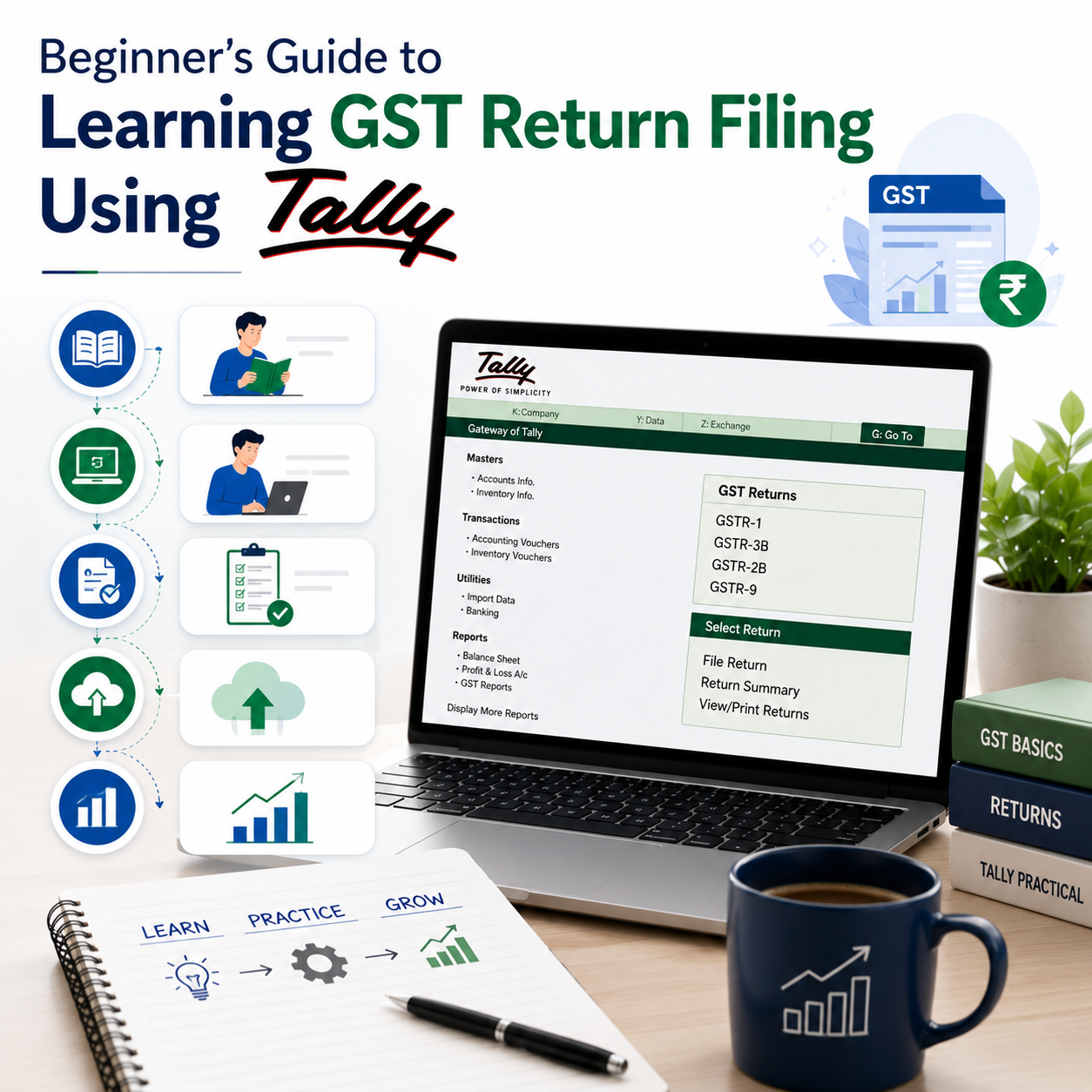
Beginners should follow a structured learning path:
- Learn GST fundamentals
- Understand Tally accounting basics
- Practice GST transactions
- Generate GST reports
- Learn return preparation
- Gain practical experience through simulations
A combination of theory and hands-on practice helps learners become confident in managing GST compliance tasks.
Conclusion
Learning GST Return in Tally is an important step for anyone looking to build skills in accounting, taxation, or finance. Tally simplifies GST management by helping users record transactions, generate reports, and prepare return information efficiently.
For beginners, practical training with simulation-based learning can make GST concepts easier to understand and help develop real-world accounting confidence. By mastering GST Return in Tally, learners can improve their career opportunities and become better prepared for professional accounting roles.
Start your journey with practical GST learning and build the skills needed to manage GST compliance confidently.