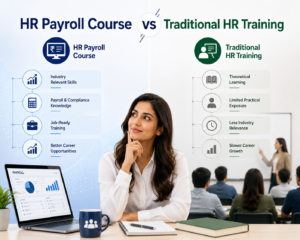
Payroll management has become an essential skill for HR professionals and accounting professionals. Organizations today need experts who can manage employee salaries, payroll compliance, taxation, and payroll software efficiently. As businesses adopt digital payroll solutions, professionals with specialized payroll knowledge have better career opportunities.
Choosing the right HR Payroll Course can help you develop practical skills and prepare for roles such as Payroll Executive, HR Payroll Specialist, and Payroll Administrator.
However, with multiple courses available online and offline, selecting the right one requires careful consideration. The ideal payroll course should provide industry-relevant knowledge, practical training, and hands-on experience with payroll tools.
A course like Mastering Payroll Management with Tally focuses on developing practical payroll skills required to handle real-world payroll operations effectively.
1. Check the Course Curriculum and Topics Covered
The first step in choosing an HR Payroll Course is reviewing the syllabus. A good payroll course should cover all important aspects of payroll management, from basic concepts to advanced processes.
Look for courses that include topics such as:
- Payroll fundamentals
- Salary structure and calculations
- Employee data management
- Attendance and leave management
- Payroll processing
- Payslip generation
- Statutory compliance
- Payroll reporting
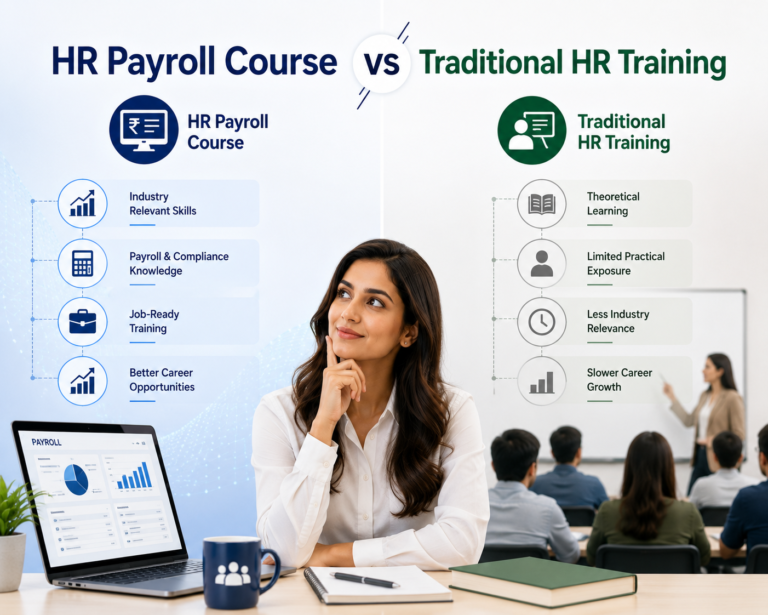
A comprehensive curriculum ensures that you gain complete knowledge of payroll operations instead of learning only theoretical concepts.
2. Choose a Course with Practical Payroll Training
Payroll is a practical function where accuracy and efficiency matter. Simply understanding concepts is not enough; professionals need hands-on experience to manage payroll tasks confidently.
While selecting an HR Payroll Course, check whether the training includes:
- Real payroll scenarios
- Practical assignments
- Salary calculation exercises
- Payroll software demonstrations
- Report generation practice
Practical learning helps you understand how payroll processes work in actual organizations.
3. Look for Payroll Software Training
Technology plays a major role in modern payroll management. Companies use payroll software to automate salary processing, maintain employee records, and generate reports.
A career-focused HR Payroll Course should include training on payroll software such as Tally Solutions.
Through Mastering Payroll Management with Tally, learners can understand practical payroll activities including:
- Creating employee records
- Configuring salary details
- Processing payroll
- Managing deductions
- Generating payroll reports
Knowledge of payroll software improves productivity and increases job readiness.
4. Consider Industry-Relevant Compliance Training
Payroll professionals must ensure that salary processing follows government regulations and company policies. Compliance knowledge is one of the most valuable skills employers look for in payroll candidates.
A good HR Payroll Course should cover important compliance areas, including:
- Provident Fund (PF)
- Employee State Insurance (ESI)
- Professional Tax
- Income Tax calculations
- Labour law basics
Understanding compliance helps professionals avoid payroll errors and support organizations in maintaining accurate records.
5. Check Trainer Experience and Learning Approach
The quality of training depends greatly on the instructor’s experience and teaching approach.
Before choosing a course, consider:
- Trainer’s industry experience
- Practical examples used during training
- Learning resources provided
- Doubt-solving support
- Course delivery method
Experienced trainers can explain complex payroll processes in a simple and practical way.
6. Choose a Course That Matches Your Career Goals
Different learners have different career objectives. Before enrolling, identify what you want to achieve from the course.
An HR Payroll Course can be beneficial for:
HR Professionals
HR professionals can strengthen their payroll knowledge and improve their career growth opportunities.
Accounting Professionals
Accounting professionals can expand their skills by learning payroll processing and employee salary management.
Students and Beginners
Beginners can build a foundation in payroll operations and prepare for entry-level HR and payroll roles.
Selecting a course aligned with your career goals helps you gain relevant skills faster.
7. Check Certification Value and Recognition
A recognized certification can improve your professional profile and demonstrate your payroll expertise to employers.
When selecting an HR Payroll Course, check whether the course provides:
- Industry-recognized certification
- Completion certificate
- Skill-based learning outcomes
- Practical project experience
A certification combined with practical knowledge can strengthen your resume and increase career opportunities.
8. Look for Flexible Learning Options
Many working professionals prefer learning programs that fit their schedules. Online payroll courses provide flexibility by allowing learners to study at their own pace.
Consider courses that offer:
- Online access
- Self-paced learning options
- Recorded sessions
- Practice materials
- Mobile-friendly learning
Flexible learning makes it easier for professionals to upgrade their skills while continuing their jobs.
Why Choose Mastering Payroll Management with Tally?
A specialized payroll course should help learners gain both conceptual understanding and practical skills. Payroll Course Online is designed to help learners understand payroll operations using industry-relevant software.
The course helps learners develop skills in:
- Payroll processing
- Salary management
- Employee record handling
- Payroll reports
- Compliance requirements
- Practical payroll workflows
It is suitable for HR professionals, accounting professionals, students, and anyone looking to build expertise in payroll management.
Career Benefits of Completing an HR Payroll Course
Completing an HR Payroll Course can open opportunities in various industries. Skilled payroll professionals are required to manage employee compensation accurately and ensure compliance.
Career opportunities include:
- Payroll Executive
- HR Payroll Specialist
- Payroll Administrator
- Compensation Executive
- HR Operations Associate
With the right skills and practical knowledge, professionals can build a strong career in HR and payroll management.
Conclusion
Choosing the best HR Payroll Course requires evaluating factors such as curriculum, practical training, software knowledge, compliance coverage, certification, and career relevance.
A well-designed payroll course helps you gain the skills needed to manage salary processing, employee records, payroll software, and compliance requirements effectively.
If you want to develop job-ready payroll skills and improve your career prospects, Mastering Payroll Management with Tally can provide the practical knowledge needed to become a confident payroll professional.