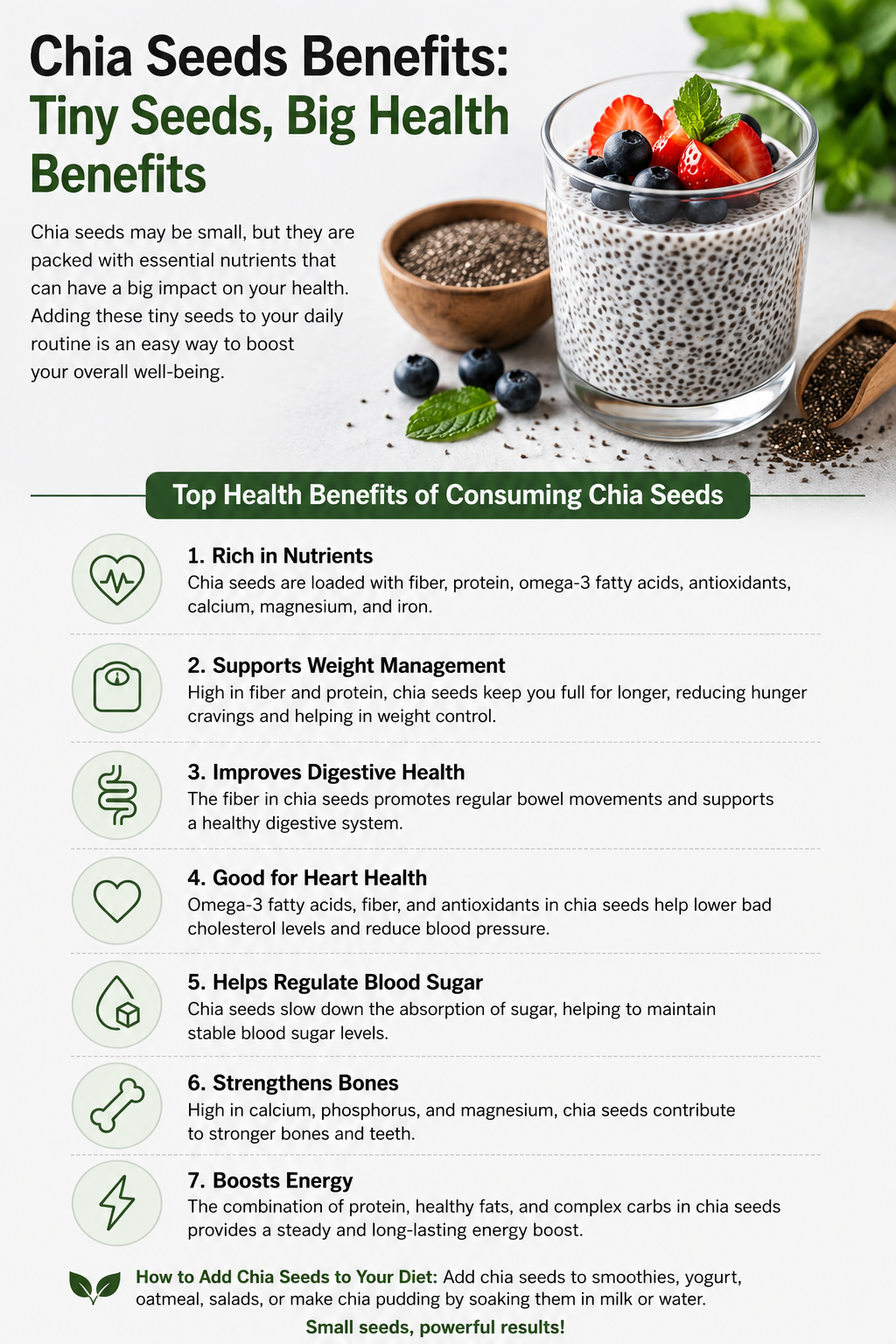
10 Science-Backed Benefits of Consuming Chia Seeds Every Day
Chia seeds have earned the title of a superfood—and for good reason. These tiny black and white seeds are packed with fiber, protein, omega-3 fatty acids, antioxidants, vitamins, and minerals that contribute to overall health.
Whether you’re looking to improve digestion, manage your weight, or support heart health, adding just one or two tablespoons of chia seeds to your daily diet can make a noticeable difference.
In this article, we’ll explore the top science-backed benefits of consuming chia seeds and how to include them in your everyday meals.
What Are Chia Seeds?
Chia seeds come from the plant Salvia hispanica, which is native to Central America. Despite their small size, they are loaded with nutrients that support various bodily functions.
Nutritional Value of Chia Seeds (Per 28g or 2 Tablespoons)
| Nutrient | Amount |
|---|---|
| Calories | 138 |
| Protein | 4.7 g |
| Fiber | 9.8 g |
| Fat | 8.7 g |
| Omega-3 Fatty Acids | 5 g |
| Calcium | 18% DV |
| Magnesium | 30% DV |
| Phosphorus | 27% DV |
Top 10 Health Benefits of Consuming Chia Seeds
1. Rich in Dietary Fiber
Chia seeds are one of the best natural sources of dietary fiber.
A serving provides nearly 10 grams of fiber, which helps:
- Improve digestion
- Prevent constipation
- Support healthy gut bacteria
- Promote regular bowel movements
Fiber also keeps you feeling full longer, reducing unnecessary snacking.
2. Supports Weight Management
If you’re trying to lose or maintain weight, chia seeds can be a helpful addition.
When mixed with water, they absorb up to 10–12 times their weight and form a gel-like texture that:
- Increases fullness
- Slows digestion
- Helps control appetite
- Reduces overeating
While chia seeds aren’t a magic weight-loss food, they support a healthy diet and active lifestyle.
3. Excellent Source of Plant-Based Omega-3 Fatty Acids
Chia seeds are rich in alpha-linolenic acid (ALA), a plant-based omega-3 fatty acid.
Omega-3s help:
- Support heart health
- Reduce inflammation
- Improve brain function
- Maintain healthy cholesterol levels
They’re especially valuable for vegetarians and vegans who don’t consume fish regularly.
4. Promotes Heart Health
The combination of fiber, omega-3 fatty acids, antioxidants, and minerals may help lower the risk of cardiovascular disease.
Regular consumption may contribute to:
- Better cholesterol balance
- Healthy blood pressure
- Reduced inflammation
- Improved blood vessel function
A heart-healthy diet combined with regular exercise provides the greatest benefit.
5. Helps Regulate Blood Sugar Levels
The soluble fiber in chia seeds slows the absorption of carbohydrates.
This may help:
- Prevent sudden blood sugar spikes
- Improve insulin sensitivity
- Support diabetes management when consumed as part of a balanced diet
People with diabetes should still follow their healthcare provider’s dietary advice.
6. High in Antioxidants
Chia seeds contain powerful antioxidants that help protect the body’s cells from damage caused by free radicals.
Benefits include:
- Reduced oxidative stress
- Slower cellular aging
- Improved immune function
- Better overall health
Unlike some delicate nutrients, the antioxidants in chia seeds remain stable during storage.
7. Strengthens Bones
Chia seeds are naturally rich in:
- Calcium
- Magnesium
- Phosphorus
- Protein
These nutrients are essential for maintaining strong bones and healthy teeth.
For individuals who consume little or no dairy, chia seeds can be a useful plant-based source of these minerals.
8. Supports Digestive Health
The gel formed by soaked chia seeds promotes smoother digestion.
Regular consumption may:
- Improve bowel health
- Encourage healthy gut bacteria
- Reduce constipation
- Support digestive comfort
Remember to drink plenty of water when increasing fiber intake.
9. Good Source of Plant Protein
Protein plays an important role in:
- Muscle repair
- Tissue growth
- Enzyme production
- Hormone balance
Chia seeds provide complete plant protein containing all nine essential amino acids, making them a valuable addition to vegetarian diets.
10. Easy to Add to Everyday Meals
One of the greatest benefits of chia seeds is their versatility.
You can add them to:
- Smoothies
- Yogurt
- Oatmeal
- Salads
- Breakfast cereals
- Homemade energy bars
- Chia pudding
- Fruit juices
Their mild flavor blends well with almost any recipe.
How Much Chia Seeds Should You Eat Daily?
Most nutrition experts recommend:
1–2 tablespoons (15–30 grams) per day
If you’re new to chia seeds:
- Start with one tablespoon.
- Drink plenty of water.
- Gradually increase your intake.
Best Ways to Consume Chia Seeds
Chia Water
Mix:
- 1 tablespoon chia seeds
- 1 glass of water
- Lemon juice (optional)
Let it soak for 20–30 minutes before drinking.
Overnight Chia Pudding
Mix chia seeds with:
- Milk or plant-based milk
- Honey
- Fresh fruits
- Nuts
Refrigerate overnight for a healthy breakfast.
Smoothies
Blend chia seeds into your favorite fruit smoothie for extra nutrition.
Are There Any Side Effects?
Chia seeds are generally safe for most people, but excessive intake may cause:
- Bloating
- Gas
- Digestive discomfort
To avoid issues:
- Increase intake gradually.
- Stay hydrated.
- Consult a healthcare professional if you have swallowing difficulties or take blood-thinning medication.
Frequently Asked Questions (FAQs)
Can I eat chia seeds every day?
Yes. Consuming 1–2 tablespoons daily is considered safe for most healthy adults as part of a balanced diet.
Should chia seeds be soaked before eating?
Soaking is not mandatory, but it improves texture and may make them easier to digest.
Can chia seeds help with weight loss?
Chia seeds may support weight management by increasing fullness and reducing hunger, but they work best alongside a healthy diet and regular exercise.
Are chia seeds good for people with diabetes?
They may help slow carbohydrate absorption and support stable blood sugar levels, but individuals with diabetes should consult their healthcare provider for personalized advice.
Which is better: chia seeds or flax seeds?
Both are nutritious. Chia seeds provide more fiber and are easier to use without grinding, while flax seeds contain additional lignans that also support health.
Final Thoughts
Chia seeds are a simple yet nutrient-dense addition to a healthy diet. Their impressive combination of fiber, omega-3 fatty acids, protein, antioxidants, and essential minerals supports digestion, heart health, blood sugar management, bone strength, and overall wellness.
Although they are not a cure-all, incorporating 1–2 tablespoons of chia seeds into your daily meals can contribute to long-term health when combined with a balanced diet, regular physical activity, and healthy lifestyle habits.